30th Birthday Cake with Sprinkles
Highlighted under: Pastry Kitchen
30th Birthday Cake with Sprinkles
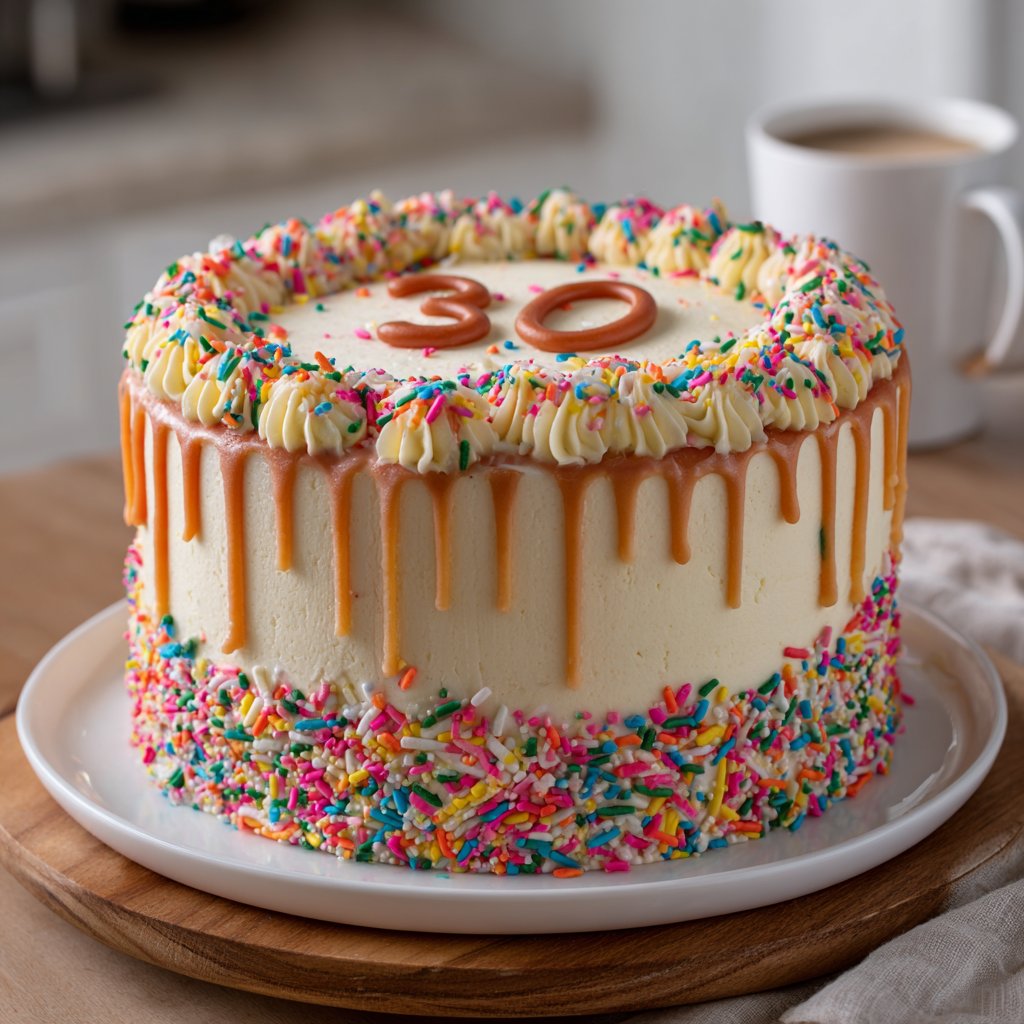
30th Birthday Cake with Sprinkles
30th Birthday Cake with Sprinkles
Choosing the Right Ingredients
For a standout 30th birthday cake, focus on using high-quality ingredients. Opt for unsalted butter for a fresher flavor and to control the saltiness of the cake. If you don’t have buttermilk on hand, you can create a substitute by mixing a cup of milk with a tablespoon of vinegar or lemon juice and letting it sit for about 5-10 minutes. This will add the necessary acidity, which helps tenderize the cake and create a wonderful crumb.
Using a combination of all-purpose flour and cake flour can elevate your cake's texture. Cake flour, which has a lower protein content, results in a softer, fluffier cake. You can easily make your own cake flour by measuring out one cup of all-purpose flour, removing two tablespoons, and replacing them with two tablespoons of cornstarch. This simple swap can make a significant difference in achieving the perfect cake for your special celebration.
Baking Techniques for Success
To ensure your cake rises beautifully and bakes evenly, preheat the oven to 350°F (175°C). I recommend using an oven thermometer to check the actual temperature, as many ovens can run hot or cold. Prepare your cake pans by greasing them with butter and dusting them with flour to prevent sticking. For added security, consider lining the bottoms of the pans with parchment paper.
Mixing the batter requires attention to detail. Cream the butter and sugar together until light and fluffy—this process can take about 4-5 minutes on medium speed. It’s essential not to rush through this step as it incorporates air into the batter, resulting in a lighter cake. When adding the eggs, incorporate them one at a time, ensuring that each is fully mixed in before adding the next. This will ensure a smoother batter, which translates into a more even texture in your finished cake.
Decorating and Serving Your Cake
Once your cake has cooled completely, it's time to decorate! A simple buttercream frosting pairs wonderfully with the cake's flavor, and it's also very forgiving when it comes to smoothing out on the sides. If the frosting is too thick, simply add a teaspoon of milk at a time until you reach the desired consistency. For a fun twist, consider adding a splash of vanilla extract or a tablespoon of your favorite flavored extract for an unexpected flavor kick.
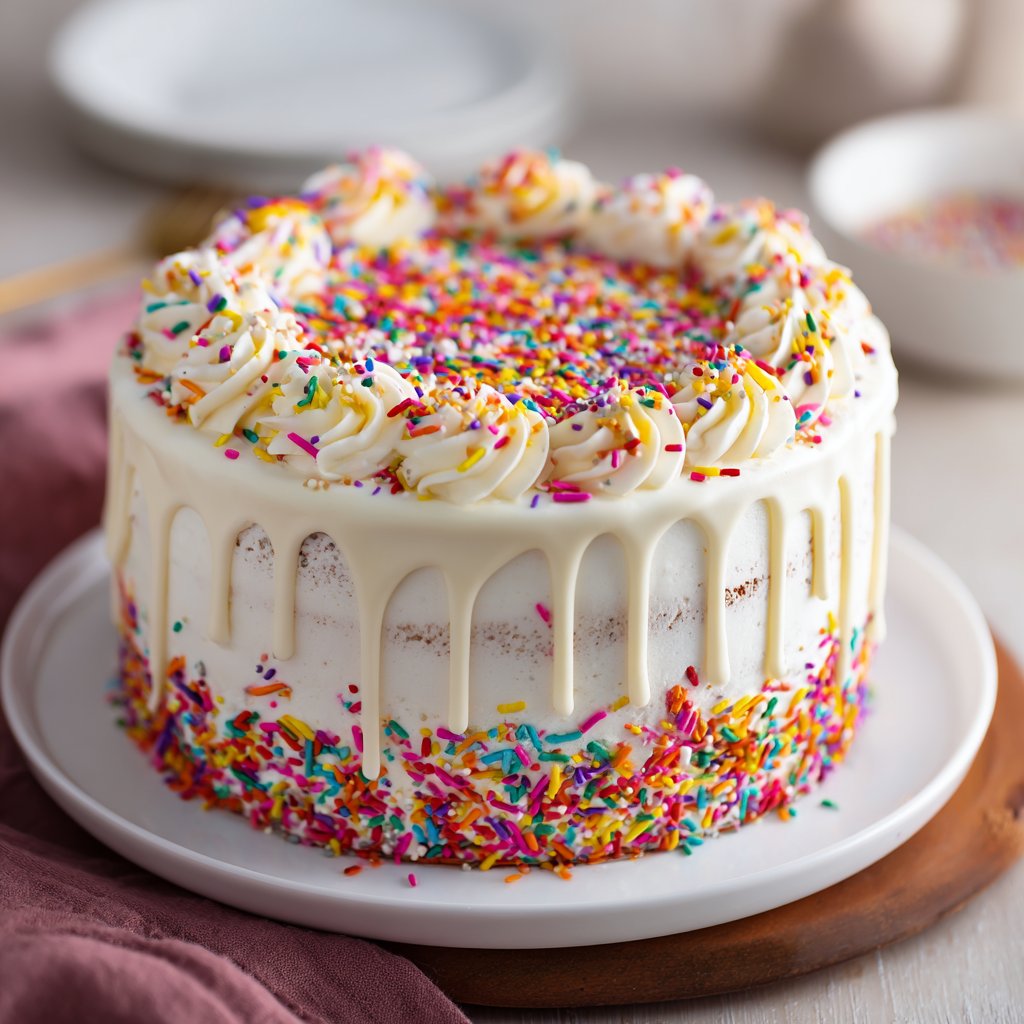
To create an eye-catching presentation, generously coat the top of the cake with sprinkles while the frosting is still soft. This helps the sprinkles adhere better and gives your cake a colorful finish. If you're planning to make the cake ahead of time, consider wrapping it tightly in plastic wrap and storing it in the refrigerator to keep it fresh. It can be made up to two days in advance; just frost it on the day of the celebration for optimal flavor and presentation.
Making Ahead and Storage Tips
If you're looking to save some time before the birthday celebration, you can prepare the cake layers a day in advance. Once cooled, wrap them tightly in plastic wrap and keep them in the refrigerator. This not only saves time on the day of but actually allows the flavors to intensify as they rest. Just make sure to bring them to room temperature before frosting to prevent any cracks in your icing.
Leftover cake? No problem! Store any uneaten cake slices in an airtight container in the refrigerator for up to a week. To keep it fresh longer, consider wrapping individual slices in plastic wrap and placing them in the freezer. They will last for up to three months. When you’re ready to enjoy them, simply thaw in the refrigerator overnight and bring to room temperature before serving.
Variations and Customizations
Don’t hesitate to personalize your cake! You can easily transform it into a chocolate cake by replacing a third of the flour with cocoa powder. This will give your cake a rich chocolate flavor while still maintaining its moist texture. If you're feeling adventurous, consider adding a layer of fruit preserves or a filling of whipped cream and strawberries between cake layers for an added burst of flavor and texture.
For a more sophisticated look, consider using fondant instead of buttercream for decorating. While it takes a bit more skill to work with, fondant allows for endless creativity, like creating intricate designs and decorations. If you’re not familiar with working with fondant, I recommend watching a few tutorial videos beforehand to see different techniques and styles.
Troubleshooting Common Issues
If your cake seems to dome while baking, this often indicates that your oven temperature was too high. Remember to double-check your oven's calibration. You can alleviate this by lowering the temperature by 25°F for the next attempt, ensuring it bakes evenly without rising too much in the center.
If the cake is too dry after baking, it could be due to overbaking or an incorrect flour-to-liquid ratio. To prevent this, keep a close eye on your cake as it nears the end of the baking time. A toothpick inserted into the center should come out with a few moist crumbs, not clean, indicating it’s perfectly baked. If you do end up with a dry cake, consider soaking it with a simple syrup made from equal parts sugar and water heated until dissolved.